

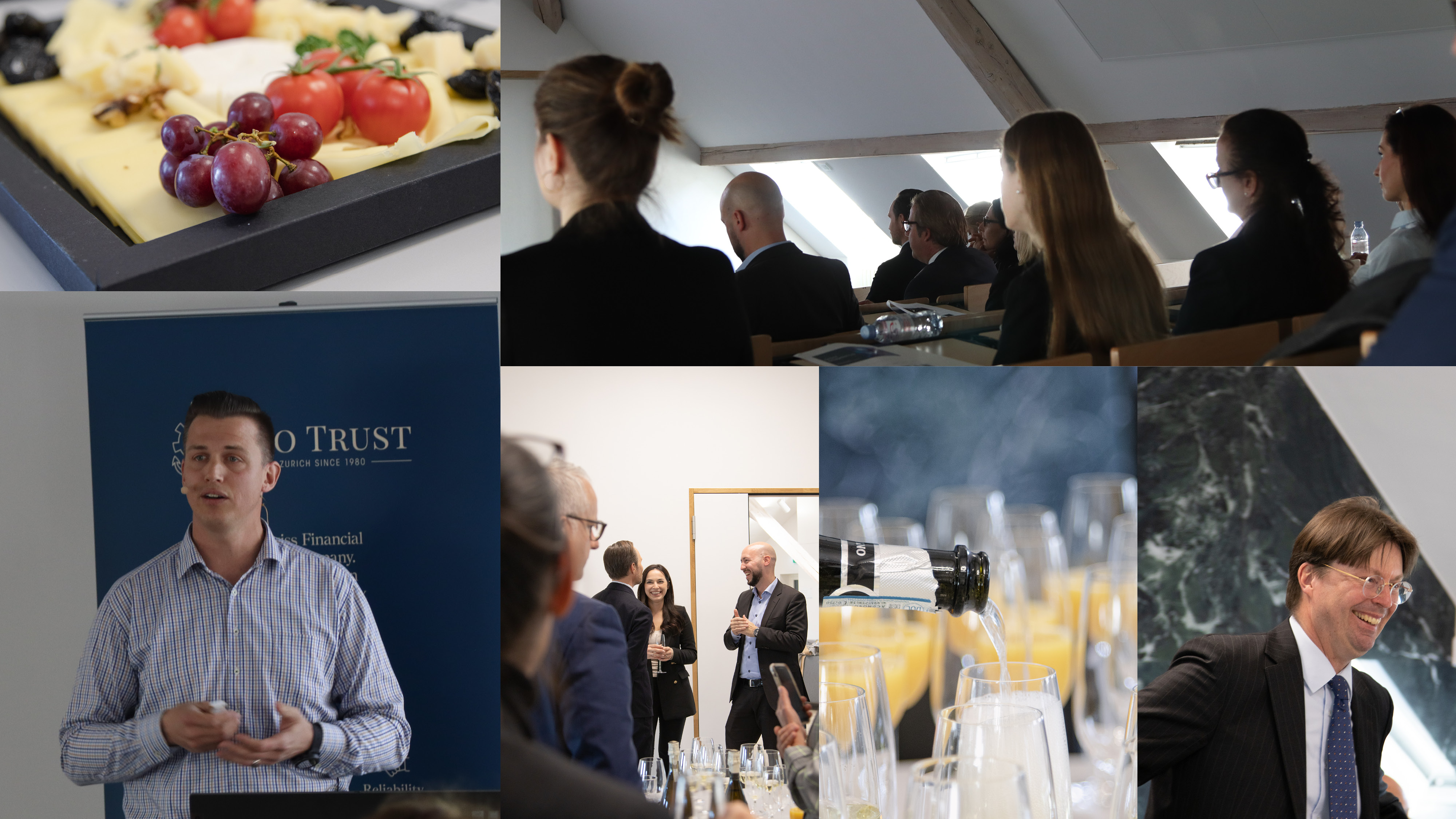
At Leo Trust’s special event, special investigator of the Kantonspolizei Zürich, Adrian Leuzinger, appeared in front of a «full house». The deputy head of the task force did not, of course, go into the tactical and technical procedures of the police, but nevertheless revealed a great deal.

In the real world, the thief lurks around the corner. Of course, we don't wish that on anyone. Which we also don't wish on anyone: Grandchild scams. This scam is used more often and more successfully than many people suspect.
But at least we know how we should behave and protect ourselves (as best we can) from it. But what about the virtual world? There, the thief may be less tangible, but he or she is also not a stranger to reality.
Leo Trust special event
In other words, the internet is a land of milk and honey for fraudsters. Online investment fraud (OAB) puts a great many people in the grave financially – and keeps the police on their toes. For several years now, Adrian Leuzinger, deputy head of the OAB task force, Kantonspolizei Zürich, has been too.
The experienced investigator turned the spotlight on the topic of the «phenomenon of online investment fraud» at the Leo Trust special event. Leo Trust illuminates some facts below:
The paradox
The scammers are extremely sophisticated and are both masters of deception and masters of camouflage. They don't ring your doorbell and try to take money from you. To make matters worse: The perpetrators are located somewhere in the world, operate across countries with the click of a mouse, and store their «stolen goods» decentralized.
There is no direct, no personal contact. Rather, they «hide» behind highly professional websites or advertisements. Their web presences are elegant, their advertisements are «state of the art» – and they tell you what you want to hear (e.g. high promises of returns). The paradox: Because there is no direct, personal (initial) contact, the victims think they are safe. Promises and professional appearances suddenly seem like seals of approval.
The crux
Promises and promising appearances are one thing. The other: Online scammers set up not only false, but also fake advertisements – and use powerful testimonials (often without their consent) from Roger Federer and Boris Becker to Ueli Maurer and Juventus Turin. The crux of the matter is that those who advertise with world stars, Swiss federal councillors or world-famous sports clubs appear free of blame. The fact that scammers use trendy topics (e.g. FX, crypto-currencies) as bait doesn't make things any better – and especially not easier for potential victims.

The vicious circle
Once the damage caused by fraud is known and the money is gone, the painful affair is not over. On the one hand, the damage goes beyond the financial aspect and often has an emotional impact on the victim and their environment. On the other hand, the victim, their data and their situation are «known» – a perfect target for follow-up fraudsters (keyword «recovery scam»).
The victims
Online investment fraud predominantly affects private individuals. Fraudsters do not «genderise» and they do not stop at age – or youth. In short, from budding adults to grandmothers, victims are gender-insensitive and cross-generational.
Companies tend to be less dazzled by quick money and promising returns. Good companies, or rather larger ones, maintain a legal or compliance department. Fraudsters must first of all undermine such control bodies – which is not an easy undertaking and is also a deterrent.
The conclusion
Online investment fraud is perfidious and no one is immune to it. «Social engineering» is a central theme – the fraudsters know to perfection how to induce desired behaviour in their victims.
The perpetrators are unknown for a long time, invisible and operate worldwide. They not only make anonymous, fast and a lot of money, but also invest a lot of money in IT (infrastructure), staff training, websites, advertisements, etc. Only through costly police investigations can the perpetrators be identified and brought to justice.
There is no such thing as 100 per cent protection. Vigilance is one way to protect oneself – and in connection with this, a cautious approach to the virtual world is advisable. «Fast money» is not available or only on Netflix, Disney+ & Co.
–
This article is aimed at providing a general overview and summary of the issue. It is non-binding, and does not and should not be taken to constitute legal advice.
What may lead to a loss of trust between Swiss family offices and Swiss financial institutions and how it may be restored.

Leo Trust Switzerland AG is a globally active financial services provider for 40 years, offering a variety of services for institutional and private clients. However, the business is changing. On the one hand, due to constantly changing regulatory standards and laws; on the other hand, due to digitalisation, globalisation and highly specific client expectations.

